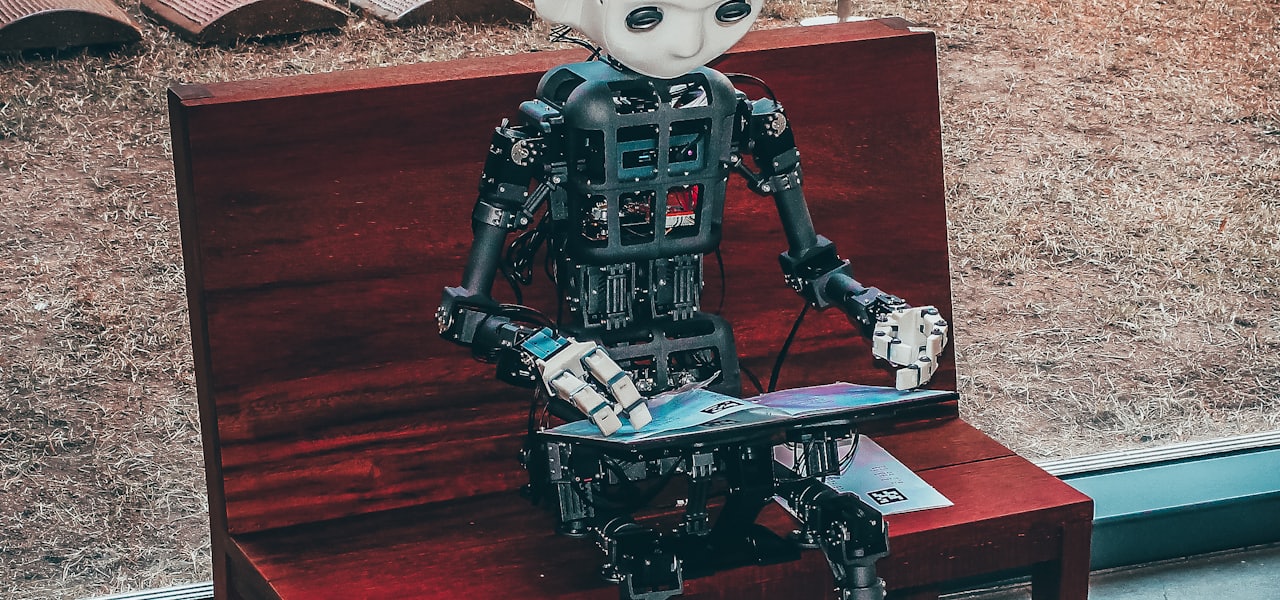
Shopping for the best AI marketing tool? An AI marketing tool is software that uses machine learning to help you get more done — it keeps getting smarter as the underlying models improve. Pricing, accuracy, and the size of the model behind the tool are the three factors that most affect daily usefulness. Whether you are a beginner or a pro, the right AI marketing tool slots into your workflow and pays for itself fast. Below we compare features, pricing, and real output so you can choose with confidence.
Normalization (image processing)
In image processing, normalization is a process that changes the range of pixel intensity values, a kind of intensity mapping. Applications include photographs with poor contrast due to glare, for example. A typical case is contrast stretching. In more general fields of data processing, such as digital signal processing, it is referred to as dynamic range expansion. The purpose of dynamic range expansion in the various applications is usually to bring the image, or other type of signal, into a range that is more familiar or normal to the senses, hence the term normalization. Often, the motivation is to achieve consistency in dynamic range for a set of data, signals, or images to avoid mental distraction or fatigue. For example, a newspaper will strive to make all of the images in an issue share a similar range of grayscale. Auto-normalization in image processing software typically normalizes to the full dynamic range of the number system specified in the image file format. == Definition == Normalization transforms an n-dimensional grayscale image I : { X ⊆ R n } → { Min , . . , Max } {\displaystyle I:\{\mathbb {X} \subseteq \mathbb {R} ^{n}\}\rightarrow \{{\text{Min}},..,{\text{Max}}\}} with intensity values in the range ( Min , Max ) {\displaystyle ({\text{Min}},{\text{Max}})} , into a new image I N : { X ⊆ R n } → { newMin , . . , newMax } {\displaystyle I_{N}:\{\mathbb {X} \subseteq \mathbb {R} ^{n}\}\rightarrow \{{\text{newMin}},..,{\text{newMax}}\}} with intensity values in the range ( newMin , newMax ) {\displaystyle ({\text{newMin}},{\text{newMax}})} . The linear normalization of a grayscale digital image is performed according to the formula I N = ( I − Min ) newMax − newMin Max − Min + newMin {\displaystyle I_{N}=(I-{\text{Min}}){\frac {{\text{newMax}}-{\text{newMin}}}{{\text{Max}}-{\text{Min}}}}+{\text{newMin}}} For example, if the intensity range of the image is 50 to 180 and the desired range is 0 to 255 the process entails subtracting 50 from each of pixel intensity, making the range 0 to 130. Then each pixel intensity is multiplied by 255/130, making the range 0 to 255. Normalization might also be non-linear, as the relationship between I {\displaystyle I} and I N {\displaystyle I_{N}} may not be linear. An example of non-linear normalization is when the normalization follows a sigmoid function, in which case the normalized image is computed according to the formula I N = ( newMax − newMin ) 1 1 + e − I − β α + newMin {\displaystyle I_{N}=({\text{newMax}}-{\text{newMin}}){\frac {1}{1+e^{-{\frac {I-\beta }{\alpha }}}}}+{\text{newMin}}} Where α {\displaystyle \alpha } defines the width of the input intensity range, and β {\displaystyle \beta } defines the intensity around which the range is centered. Gamma correction (log/inverse log) is also a common transformation function. === Colorspace === Intensity operations generally operate on a colorspace that maps to the human perception of lightness without intentionally changing the other properties. This can be done, for example, by operating on the L component of the CIELAB color space, or approximately by operating on the Y component of YCbCr. It is also possible to operate on each of the RGB color channels, though the result will not always make sense. == Contrast stretching == This is the most significant and essential technique of spatial-based image enhancement. The basic intent of this contrast enhancement technique is to adjust the local contrast in the image so as to bring out the clear regions or objects in the image. Low-contrast images often result from poor or non-uniform lighting conditions, a limited dynamic range of the imaging sensor, or improper settings of the lens aperture. This operation tries to change the intensity of the pixel in the image, particularly in the input image, to obtain an enhanced image. It is based on the number of techniques, namely local, global, dark and bright levels of contrast. The contrast enhancement is considered as the amount of color or gray differentiation that lies among the different features in an image. The contrast enhancement improves the quality of image by increasing the luminance difference between the foreground and background. A contrast stretching transformation can be achieved by: Stretching the dark range of input values into a wider range of output values: This involves increasing the brightness of the darker areas in the image to enhance details and improve visibility. Shifting the mid-range of input values: This involves adjusting the brightness levels of the mid-tones in the image to improve overall contrast and clarity. Compressing the bright range of input values: This process involves reducing the brightness of the brighter areas in the image to prevent overexposure resulting in a more balanced and visually appealing image. It can be described as the following piecewise funciton: I N = { s 1 r 1 I if I < r 1 s 2 − s 1 r 1 − r 2 ( I − r 1 ) if r 1 ≤ I ≤ r 2 1 − s 2 1 − r 2 ( I − r 2 ) if I > r 2 {\displaystyle I_{N}={\begin{cases}{\frac {s_{1}}{r_{1}}}I&{\text{if }}I
Google Clips
Google Clips is a discontinued miniature clip-on camera device developed by Google. == History == It was announced on October 4, 2017 and went on sale on January 27, 2018. Google Clips automatically captured video clips (without audio) at moments its machine learning algorithms determined to be interesting or relevant. An indicator flashed when the camera was looking for scenes to capture. Google Clips' artificial intelligence (AI) could learn the faces of people to take photographs with certain people, and could automatically set lighting and framing. It had 16 GB of storage built-in storage and could record clips for up to 3 hours. This camera was originally priced at US$249 in the United States. It was withdrawn from sale on October 15, 2019, but supported until the end of December 2021. == Reception == The Independent wrote that Google Clips is "an impressive little device, but one that also has the potential to feel very creepy." According to The Verge's generally negative review, "it didn't capture anything special" over two weeks of testing.
Something Big Is Happening
"Something Big Is Happening" is an essay by Matt Shumer, an AI entrepreneur, about the impact of artificial intelligence, published in February 2026, that has since been reportedly viewed more than 80 million times and widely discussed. Shumer noted that the technology has crossed an important threshold, where AI has become capable of creating self-improving systems. Referring to one the most recent AI models, he wrote: "It was making intelligent decisions. It had something that felt, for the first time, like judgment. Like taste." Speaking to CNBC's Power Lunch, Shumer said that his "core message" is "people in the workforce should start to use and experiment with AI tools so they can understand what’s coming". Even as the essay was widely shared and discussed, the essay also elicited criticism. Paulo Carvao, in an essay published by the Forbes Magazine stated that some of his advice is sound, but added: "It reads at times like a sales pitch. He urges readers to subscribe to the most advanced AI tools. He implies that those with access to premium models will outpace those without. He frames paid AI subscriptions as a form of insurance against obsolescence." Writing in The Guardian, Dan Milmo and Aisha Down mentioned Shumer as having a history of AI hype and stated, "He previously excited the internet by announcing the release of the world's "top open-source model", which it was not". Many workers in the technology sector criticized the article in blog posts shared on Hacker News; Edward Zitron commented that "while coding LLMs can test products, or scan/fix some bugs, this suggests they A) do this autonomously without human input, B) they do this correctly every time (or ever!)." In an article alluding to Shumer's original post, Ari Colaprete wrote "the LLM is fundamentally a writing machine, it does everything via text, and if you make it produce writing that exists purely to serve some sort of mechanical function, and you train it to succeed in that task, then it will tend to do so, even with vast intricacy."
AI data center
An AI data center is a specialized data center facility designed for the computationally intensive tasks of training and running inference for artificial intelligence (AI) and machine learning models. Unlike general-purpose data centers, they are optimized for the parallel processing demands of AI workloads, typically using hardware such as AI accelerators (e.g., GPUs, TPUs) and high-speed interconnects. The global push to construct these specialized facilities accelerated dramatically during the AI boom of the 2020s. Memory manufacturers prioritized production of High Bandwidth Memory (HBM) essential for AI servers, which led to a global memory supply shortage amid a broader competition for advanced chips, power, and infrastructure. Major tech companies are estimated to spend $650 billion on AI data centers in 2026. == Architecture == Data centers for building and running large machine learning models contain specialized computer chips, GPUs, that use 2 to 4 times as much energy as their regular CPU counterparts (250-500 watts). AI data centers use 60 or more kilowatts per server rack, whereas more standard data centers typically use 5 to 10 kilowatts per rack. == Operators == As of August 2025, The Information tracked 18 planned or existing AI data centers in the United States, operated by Amazon Web Services, CoreWeave, Crusoe, Meta, Microsoft/OpenAI, Oracle, Tesla, and xAI. Other AI data center operators include Digital Realty and Alibaba. Data centers are also being built in China, India, Europe, Saudi Arabia, and Canada. The New Yorker described CoreWeave as the most prominent AI data center operator in the United States. Two types of data center providers for machine learning have been noted: hyperscalers and neoclouds. The Verge listed large technology companies such as Google, Meta, Microsoft, Oracle and Amazon as hyperscalers. The New York Times described neoclouds as "a new generation of data center providers". CoreWeave, Nebius, Nscale, and Lambda have been described as examples of neoclouds. In January 2025, OpenAI, in partnership with Oracle and Softbank, announced the Stargate project, which as of September 2025 is composed of six built or proposed AI data centers in the United States. In response to the Stargate project, Amazon launched in October 2025 an AI data center on 1,200 acres of farmland in Indiana. This data center, known as Project Rainier, is one of the largest AI data centers in the world, with Amazon spending $11 billion on the project. Rainier is specifically intended for training and running machine learning models from Anthropic. As of that time, this facility contains seven data centers (out of an estimated 30 planned) and will use 2.2 gigawatts of electricity (equivalent to 1 million households) and millions of gallons of water per year. Computer chips from Annapurna Labs and Anthropic, Trainium 2, were designed for use in such facilities. Amazon pumped millions of gallons of water out of the ground to construct the data center, and as of June 2025, Indiana state officials are investigating whether this dewatering process led to dry wells for local residents. In November 2025, Anthropic announced a plan in partnership with Fluidstack to develop artificial intelligence infrastructure in the United States, including data centers in New York and Texas, worth $50 billion. Other AI data center projects include the Colossus supercomputer from xAI, a Louisiana-based project from Meta, Hyperion, expected to use 5 GW of power, and a second Ohio-based Meta project, Prometheus, with a capacity of 1 GW. A 3,200-acre AI data center, capable of 4.4-4.5 GW of power and located on the decommissioned Homer City Generating Station, is under construction as of 2025, and will use seven 30-acre gas generating stations supplied by EQT. As of December 2025, CRH is working on over 100 data centers in the United States. In 2025, ExxonMobil and NextEra announced plans to build a data center powered by natural gas and using carbon capture technology, with 1.2 GW of power capacity. They previously purchased 2,500 acres of land in the Southeastern United States and plan to market the data center to an artificial intelligence company. The increased interest in AI data centers has led to several executives from companies in that space becoming billionaires, including CoreWeave, QTS, Nebius, Astera Labs, Groq, Fermi (which is connected to former United States Secretary of Energy Rick Perry), Snowflake and Cipher Mining. Several companies involved in cryptocurrency mining, such as Bitdeer, CoreWeave, Cipher Mining, TeraWulf, IREN, Core Scientific, and CleanSpark have also been involved with AI data centers. == Finances == Between January and August 2024, Microsoft, Meta, Google and Amazon collectively spent $125 billion on AI data centers. Citigroup forecasted that $2.8 trillion would be spent on AI data centers by 2030, while McKinsey and Company estimated that almost $7 trillion would be spent globally by that time. According to S&P Global, $61 billion has been spent on the data center market as a whole in 2025, while debt issuance for data centers was $182 billion during the same year. Large technology companies have offloaded the financial risks of building AI data centers by setting up special purpose vehicles or by contracting with neoclouds. For example, Meta's Hyperion was mostly funded by Blue Owl Capital, which did so using a bond offering from PIMCO. Those bonds were sold to a number of clients, including BlackRock. Meta did not borrow money itself and instead established a special purpose vehicle from which it would rent the data center. This deal was structured by Morgan Stanley for $30 billion, the largest known private capital transaction as of 2025. Neoclouds such as CoreWeave have gone into debt to buy computer chips from Nvidia for their data centers, and the chips themselves have been used for loan collateral. As of December 2025, CoreWeave took out three GPU-backed loans, collectively worth $12.4 billion, from private credit firms (Blackstone, Coatue, BlackRock, PIMCO) and from banks (Goldman Sachs, JPMorgan Chase, Wells Fargo). Thus, these companies provide an indirect connection between private credit and established banks. Data centers have also established asset-backed securities, and debt for data centers has its own derivative financial products. The real estate industry, including asset managers, public companies and private investors, has also invested in data centers. == Energy sourcing == == Environmental footprint == Average AI data centers have an electricity footprint equivalent to 100,000 households, and use billions of gallons of water for cooling their hardware. In 2025, the International Energy Agency estimated that the larger AI data centers currently under construction could consume as much electricity as 2 million households. A 2024 report from the United States Department of Energy stated that data centers overall used 17 billion gallons of water per year in the United States, primarily due to "rapid proliferation of AI servers", and that this usage was forecasted to grow to nearly 80 billion gallons by 2028. Researchers estimated that AI data centers in the United States would emit 24-44 million metric tons of carbon dioxide and use 731–1,125 million cubic meters of water per year between 2024 and 2030. Peaking power plants, which have been proposed as a power source for AI data centers, emit sulfur dioxide and have historically been located disproportionately near communities of color in the United States. Reciprocating internal combustion engines, proposed as another power source for a data center, emit PM 2.5, nitrogen oxides, and volatile organic compounds. == AI data centers in the United States == In the United States, both the Biden administration and second Trump administration supported the construction of AI data centers. In January 2025, then-president Joe Biden signed an executive order for federal government agencies to support AI data centers on federal sites built by private companies, study their effect on energy prices, and encourage their use of renewable energy. In April 2025, the United States Department of Energy suggested 16 possible sites, including Los Alamos National Laboratory, Sandia National Laboratories and Oak Ridge National Laboratory. In its July 2025 AI Action Plan, the second Trump administration supported increased production of AI data centers. Several US states have incentivized local data center construction. For example, in 2024, lawmakers in Michigan approved tax breaks for data center equipment and construction material. Some data center companies have also invested or promised to invest in the infrastructure of local communities. In December 2025, Democratic senators Elizabeth Warren, Chris Van Hollen, and Richard Blumenthal wrote to seven technology companies (Google, Microsoft, Amazon, Meta, CoreWeave, Digital Realty, and Equinix) that they w
The Visualization Handbook
The Visualization Handbook is a textbook by Charles D. Hansen and Christopher R. Johnson that serves as a survey of the field of scientific visualization by presenting the basic concepts and algorithms in addition to a current review of visualization research topics and tools. It is commonly used as a textbook for scientific visualization graduate courses. It is also commonly cited as a reference for scientific visualization and computer graphics in published papers, with almost 500 citations documented on Google Scholar. == Table of Contents == PART I - Introduction Overview of Visualization - William J. Schroeder and Kenneth M. Martin PART II - Scalar Field Visualization: Isosurfaces Accelerated Isosurface Extraction Approaches -Yarden Livnat Time-Dependent Isosurface Extraction - Han-Wei Shen Optimal Isosurface Extraction - Paolo Cignoni, Claudio Montani, Robert Scopigno, and Enrico Puppo Isosurface Extraction Using Extrema Graphs - Takayuki Itoh and Koji Koyamada Isosurfaces and Level-Sets - Ross Whitaker PART III - Scalar Field Visualization: Volume Rendering Overview of Volume Rendering - Arie E. Kaufman and Klaus Mueller Volume Rendering Using Splatting - Roger Crawfis, Daqing Xue, and Caixia Zhang Multidimensional Transfer Functions for Volume Rendering - Joe Kniss, Gordon Kindlmann, and Charles D. Hansen Pre-Integrated Volume Rendering - Martin Kraus and Thomas Ertl Hardware-Accelerated Volume Rendering - Hanspeter Pfister PART IV - Vector Field Visualization Overview of Flow Visualization - Daniel Weiskopf and Gordon Erlebacher Flow Textures: High-Resolution Flow Visualization - Gordon Erlebacher, Bruno Jobard, and Daniel Weiskopf Detection and Visualization of Vortices - Ming Jiang, Raghu Machiraju, and David Thompson PART V - Tensor Field Visualization Oriented Tensor Reconstruction - Leonid Zhukov and Alan H. Barr Diffusion Tensor MRI Visualization - Song Zhang, David Laidlaw, and Gordon Kindlmann Topological Methods for Flow Visualization - Gerik Scheuermann and Xavier Tricoche PART VI - Geometric Modeling for Visualization 3D Mesh Compression - Jarek Rossignac Variational Modeling Methods for Visualization - Hans Hagen and Ingrid Hotz Model Simplification - Jonathan D. Cohen and Dinesh Manocha PART VII - Virtual Environments for Visualization Direct Manipulation in Virtual Reality - Steve Bryson The Visual Haptic Workbench - Milan Ikits and J. Dean Brederson Virtual Geographic Information Systems - William Ribarsky Visualization Using Virtual Reality - R. Bowen Loftin, Jim X. Chen, and Larry Rosenblum PART VIII - Large-Scale Data Visualization Desktop Delivery: Access to Large Datasets - Philip D. Heermann and Constantine Pavlakos Techniques for Visualizing Time-Varying Volume Data - Kwan-Liu Ma and Eric B. Lum Large-Scale Data Visualization and Rendering: A Problem-Driven Approach - Patrick McCormick and James Ahrens Issues and Architectures in Large-Scale Data Visualization - Constantine Pavlakos and Philip D. Heermann Consuming Network Bandwidth with Visapult - Wes Bethel and John Shalf PART IX - Visualization Software and Frameworks The Visualization Toolkit - William J. Schroeder and Kenneth M. Martin Visualization in the SCIRun Problem-Solving Environment - David M. Weinstein, Steven Parker, Jenny Simpson, Kurt Zimmerman, and Greg M. Jones Numerical Algorithms Group IRIS Explorer - Jeremy Walton AVS and AVS/Express - Jean M. Favre and Mario Valle Vis5D, Cave5D, and VisAD - Bill Hibbard Visualization with AVS - W. T. Hewitt, Nigel W. John, Matthew D. Cooper, K. Yien Kwok, George W. Leaver, Joanna M. Leng, Paul G. Lever, Mary J. McDerby, James S. Perrin, Mark Riding, I. Ari Sadarjoen, Tobias M. Schiebeck, and Colin C. Venters ParaView: An End-User Tool for Large-Data Visualization - James Ahrens, Berk Geveci, and Charles Law The Insight Toolkit: An Open-Source Initiative in Data Segmentation and Registration - Terry S. Yoo amira: A Highly Interactive System for Visual Data Analysis - Detlev Stalling, Malte Westerhoff, and Hans-Christian Hege PART X - Perceptual Issues in Visualization Extending Visualization to Perceptualization: The Importance of Perception in Effective Communication of Information - David S. Ebert Art and Science in Visualization - Victoria Interrante Exploiting Human Visual Perception in Visualization - Alan Chalmers and Kirsten Cater PART XI - Selected Topics and Applications Scalable Network Visualization - Stephen G. Eick Visual Data-Mining Techniques - Daniel A. Keim, Mike Sips, and Mihael Ankerst Visualization in Weather and Climate Research - Don Middleton, Tim Scheitlin, and Bob Wilhelmson Painting and Visualization - Robert M. Kirby, Daniel F. Keefe, and David Laidlaw Visualization and Natural Control Systems for Microscopy - Russell M. Taylor II, David Borland, Frederick P. Brooks, Jr., Mike Falvo, Kevin Jeffay, Gail Jones, David Marshburn, Stergios J. Papadakis, Lu-Chang Qin, Adam Seeger, F. Donelson Smith, Dianne Sonnenwald, Richard Superfine, Sean Washburn, Chris Weigle, Mary Whitton, Leandra Vicci, Martin Guthold, Tom Hudson, Philip Williams, and Warren Robinett Visualization for Computational Accelerator Physics - Kwan-Liu Ma, Greg Schussman, and Brett Wilson
Curse of dimensionality
The curse of dimensionality refers to various phenomena that arise when analyzing and organizing data in high-dimensional spaces that do not occur in low-dimensional settings such as the three-dimensional physical space of everyday experience. The expression was coined by Richard E. Bellman when considering problems in dynamic programming. The curse generally refers to issues that arise when the number of datapoints is small (in a suitably defined sense) relative to the intrinsic dimension of the data. Dimensionally cursed phenomena occur in domains such as numerical analysis, sampling, combinatorics, machine learning, data mining and databases. The common theme of these problems is that when the dimensionality increases, the volume of the space increases so fast that the available data becomes sparse. In order to obtain a reliable result, the amount of data needed often grows exponentially with the dimensionality. Also, organizing and searching data often relies on detecting areas where objects form groups with similar properties; in high dimensional data, however, all objects appear to be sparse and dissimilar in many ways, which prevents common data organization strategies from being efficient. == Domains == === Combinatorics === In some problems, each variable can take one of several discrete values, or the range of possible values is divided to give a finite number of possibilities. Taking the variables together, a huge number of combinations of values must be considered. This effect is also known as the combinatorial explosion. Even in the simplest case of d {\displaystyle d} binary variables, the number of possible combinations already is 2 d {\displaystyle 2^{d}} , exponential in the dimensionality. Naively, each additional dimension doubles the effort needed to try all combinations. === Sampling === There is an exponential increase in volume associated with adding extra dimensions to a mathematical space. For example, 102 = 100 evenly spaced sample points suffice to sample a unit interval (try to visualize a "1-dimensional" cube, i.e. a line) with no more than 10−2 = 0.01 distance between points; an equivalent sampling of a 10-dimensional unit hypercube with a lattice that has a spacing of 10−2 = 0.01 between adjacent points would require 1020 = [(102)10] sample points. In general, with a spacing distance of 10−n the 10-dimensional hypercube appears to be a factor of 10n(10−1) = [(10n)10/(10n)] "larger" than the 1-dimensional hypercube, which is the unit interval. In the above example n = 2: when using a sampling distance of 0.01 the 10-dimensional hypercube appears to be 1018 "larger" than the unit interval. This effect is a combination of the combinatorics problems above and the distance function problems explained below. === Optimization === When solving dynamic optimization problems by numerical backward induction, the objective function must be computed for each combination of values. This is a significant obstacle when the dimension of the "state variable" is large. === Machine learning === In machine learning problems that involve learning a "state-of-nature" from a finite number of data samples in a high-dimensional feature space with each feature having a range of possible values, typically an enormous amount of training data is required to ensure that there are several samples with each combination of values. In an abstract sense, as the number of features or dimensions grows, the amount of data we need to generalize accurately grows exponentially. A typical rule of thumb is that there should be at least 5 training examples for each dimension in the representation. In machine learning and insofar as predictive performance is concerned, the curse of dimensionality is used interchangeably with the peaking phenomenon, which is also known as Hughes phenomenon. This phenomenon states that with a fixed number of training samples, the average (expected) predictive power of a classifier or regressor first increases as the number of dimensions or features used is increased but beyond a certain dimensionality it starts deteriorating instead of improving steadily. Nevertheless, in the context of a simple classifier (e.g., linear discriminant analysis in the multivariate Gaussian model under the assumption of a common known covariance matrix), Zollanvari et al. showed both analytically and empirically that as long as the relative cumulative efficacy of an additional feature set (with respect to features that are already part of the classifier) is greater (or less) than the size of this additional feature set, the expected error of the classifier constructed using these additional features will be less (or greater) than the expected error of the classifier constructed without them. In other words, both the size of additional features and their (relative) cumulative discriminatory effect are important in observing a decrease or increase in the average predictive power. In metric learning, higher dimensions can sometimes allow a model to achieve better performance. After normalizing embeddings to the surface of a hypersphere, FaceNet achieves the best performance using 128 dimensions as opposed to 64, 256, or 512 dimensions in one ablation study. A loss function for unitary-invariant dissimilarity between word embeddings was found to be minimized in high dimensions. === Data mining === In data mining, the curse of dimensionality refers to a data set with too many features. Consider the first table, which depicts 200 individuals and 2000 genes (features) with a 1 or 0 denoting whether or not they have a genetic mutation in that gene. A data mining application to this data set may be finding the correlation between specific genetic mutations and creating a classification algorithm such as a decision tree to determine whether an individual has cancer or not. A common practice of data mining in this domain would be to create association rules between genetic mutations that lead to the development of cancers. To do this, one would have to loop through each genetic mutation of each individual and find other genetic mutations that occur over a desired threshold and create pairs. They would start with pairs of two, then three, then four until they result in an empty set of pairs. The complexity of this algorithm can lead to calculating all permutations of gene pairs for each individual or row. Given the formula for calculating the permutations of n items with a group size of r is: n ! ( n − r ) ! {\displaystyle {\frac {n!}{(n-r)!}}} , calculating the number of three pair permutations of any given individual would be 7988004000 different pairs of genes to evaluate for each individual. The number of pairs created will grow by an order of factorial as the size of the pairs increase. The growth is depicted in the permutation table (see right). As we can see from the permutation table above, one of the major problems data miners face regarding the curse of dimensionality is that the space of possible parameter values grows exponentially or factorially as the number of features in the data set grows. This problem critically affects both computational time and space when searching for associations or optimal features to consider. Another problem data miners may face when dealing with too many features is that the number of false predictions or classifications tends to increase as the number of features grows in the data set. In terms of the classification problem discussed above, keeping every data point could lead to a higher number of false positives and false negatives in the model. This may seem counterintuitive, but consider the genetic mutation table from above, depicting all genetic mutations for each individual. Each genetic mutation, whether they correlate with cancer or not, will have some input or weight in the model that guides the decision-making process of the algorithm. There may be mutations that are outliers or ones that dominate the overall distribution of genetic mutations when in fact they do not correlate with cancer. These features may be working against one's model, making it more difficult to obtain optimal results. This problem is up to the data miner to solve, and there is no universal solution. The first step any data miner should take is to explore the data, in an attempt to gain an understanding of how it can be used to solve the problem. One must first understand what the data means, and what they are trying to discover before they can decide if anything must be removed from the data set. Then they can create or use a feature selection or dimensionality reduction algorithm to remove samples or features from the data set if they deem it necessary. One example of such methods is the interquartile range method, used to remove outliers in a data set by calculating the standard deviation of a feature or occurrence. === Distance function === When a measure such as a Euclidean distance is defined using many coordinat